Pages

Exploring Disney Sea Part 5: Omiyage (Souvenirs)


Of course no trip to a Disney park, especially an overseas one, would be complete without omiyage, or souvenirs, to remember your special day (or more, since admission to Tokyo Disney parks costs only about 70 US dollars, a third to a fourth of the price of what you'll pay in the states!). Naturally there are plenty of places to get everything from plushes, hats, jewelry, popcorn buckets, stationary, home decor, and more all around Disney Sea.

Exploring Disney Sea Part 4: Food!

Disney Sea offers some amazing food!


One of my absolute favorites of Tokyo Disney, besides the amazing souvenirs, is all the awesome food! I have to admit, after noshing around Tokyo Disneyland and Sea, Anaheim Disneyland fell pretty flat for me. Aside from the Dole Whip, monte cristo, and the most amazing chocolate swirl ice cream cone at the California Adventure pier (whose awesomeness was probably 50% contributed to the heat), there's not a lot of stuff I get excited for here. I'd say some of that has to do with the fact that Tokyo Disney always features changing menu items throughout the year. Case in point, when I discovered a Disney magazine in Japan I always studied it carefully before going to the park so I would know exactly what to eat and what to buy. Let's face it  a day at Disneyland is not a day to be on a diet! There is so much good food at Tokyo Disneyland and Sea I recommend eating light throughout the day so you can try everything!

First off, let's talk about popcorn. Because popcor is a big thing at TDL/S. You'll even see Disney popcorn bracelets attached to young people's bags and wonder what the big deal is. This is not your standard buttered popcorn! TDL/S proudly features a tasty array of popcorn flavors, from savory to sweet: soy sauce and butter, curry, salt, BBQ, caramel, milk chocolate, honey, and even strawberry.

Get a popcorn bucket for free refills on all popcorn at Disney Sea, including milk chocolate.

A Breakdown of Chinese Food in Japan


A full spread of typical Chinese food in Japan.

I happen to love chuuka ryori 中華料理, Chinese food (who doesn't?). From upscale PF Changs, to humble Panda Express, I love it all. Just like Americans (and basically everyone else on the planet), Japanese people love Chinese food, too. Chinese restaurants are as abundant in Japan as Mexican restaurants are in California  you can find one virtually on the corner of every street. Of course, every country foreign cuisines adapts to its own tastes  hence, you will find that Chinese food in Japan is very different from what you're used to in America. You won't find any beef with broccoli, general tso's chicken, kung pao chicken, or even orange chicken on the menus here (you'll have to go to the Panda Express located in Kawasaki for that). That being said, I think you'll find that it is much closer to authentic Chinese dishes (having never been to China myself, I'll leave this up to the pros to decide).

Here's a look at the Chinese dishes served in Japan. Eat your heart out (or not, on some of these items).

1. Subuta 酢豚
Subuta

Exploring Disney Sea Part 3: Lost River Delta and Arabian Coast


Indiana Jones and the Temple of the Crystal Skull awaits in Lost River Delta
Our last destinations around Disney Sea include the Lost River Delta and Arabian Coast, where you'll find jungles and temples, and maybe even catch a glimpse of Jasmine and Genie!

Lost River Delta

This area of the park is basically the equivalent of Adventureland. It features jungles, ancient runes, and a small South American style village featuring some of the only Mexican food in Japan. Attractions include Indiana Jones Adventure: Temple of the Crystal Skull, DisneySea Transit Steamer Line, and Raging Spirits. In a way this is my favorite area of the park because it has my favorite ride in all of Disney Sea  Indiana Jones! It's absent from Tokyo Disneyland because they decided to put it here instead.

One of the best lookouts in the Lost River Delta is the river and bridge connecting the park, where you can see the transit steamer line journeying down the river. The red against the green and blue makes for a pretty picture.

See Disney Sea from the comfort of DisneySea Transit Steamer.

What's on the Menu at Wendy's Japan – and You Won't Find a Frosty


While I'm not one for fast food, given the choice I'd have to say Wendy's is my favorite. I actually saw one open in Yokohama right before I left Japan, but I didn't get a chance to try it. Little did I know, the menu is totally different! My go-to has always been chicken nuggets and frosties, but to my surprise you can't even get a frosty in Japan! Wendy's Japan features a more upscale menu than its American counterpart, called "Wendy's First Kitchen". While there may not be any frosties, there's plenty of other delicious looking food to make up for it!

Burgers

A typical Wendy's burger in America looks something like this:


Average Wendy's burger

Pretty average, right? Meanwhile, in Japan, you'll find more sophisticated looking fare.

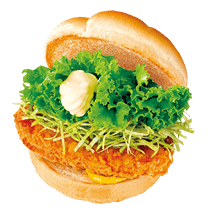
Crispy pork burger
Roppongi cheese-bacon-egg burger

Veggie Pops at Mister Donut Japan, and Frighteningly Delicious Halloween Donuts


Mister Donut's "veggie pops" blend strawberries, apples, and pineapple with carrots, pumpkin, tomatoes, and spinach for a healthy treat.
The Japanese people are generally known as being very healthy, given their diet, level of activity, and impressive concentration of centenarians. However they still love to indulge in karaage (fried chicken), ramen, and tempura, too. In this day and age we are faced with a plethora of both healthy and "comfort food" options at stores and restaurants, but why not put two and two together? Mister Donut did just that, creating "veggie pops", petite-sized, brightly colored donuts with tofu cream filling. It's an effort to feel "healthy" while snacking on fried balls of dough, because if you think you're eating carrots and spinach, it must be healthy no matter how much oil and sugar is in it, right? They're also tiny (hence the name "pops"), which also makes you feel healthier, so win-win!


Three pops available in red, orange, and green.

Entertainment at Haneda International Airport


2016-12-17 12.51.25.jpg
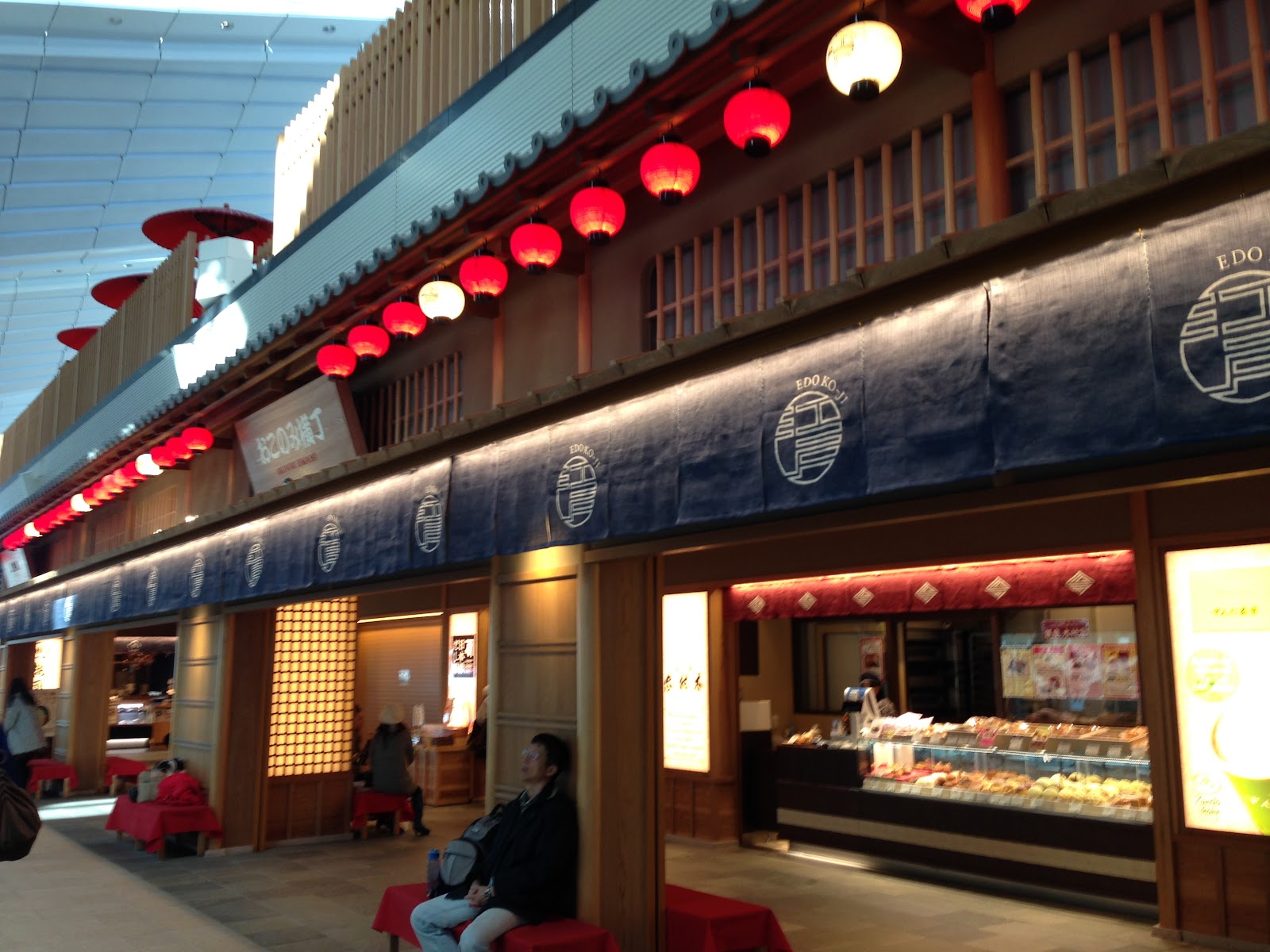
Under Haneda's nihonbashi in Edo Market.
Recently I flew from Tokyo to Los Angeles through a different way than I normally do  Haneda International Airport. I’ve always gone to Narita, begrudging the long distance to get there, as it’s basically in the middle of nowhere. I was surprised that Haneda has an international terminal, and found it a wonderful change! While I’m not saying Narita is terrible, Haneda is bursting with entertainment to occupy you while you wait for your flight! Plan a visit for your next travel plans to check out all the great amenities it has to offer.

Restaurants

2016-12-17 13.04.53.jpg
Katsudon set.

What it's like to get your education in Japan

My class of sixth grade Japanese students.
In my three years of experience teaching K-12 in Japan, I learned more about the Japanese education system and school life than I could ever have from any book. Just as my homestay at a high school in Kobe, Japan taught me, there are plenty of similarities between school in the U.S. vs Japan, but plenty of things that are different, too. Although it was never my intention to become a teacher, it’s the most popular method to live and work in Japan, and it was an eye-opening experience that taught me a lot about Japanese people and their culture and beliefs than if I had had a regular job.

How to Enjoy Natsu Matsuri (Summer Festivals)

Although summer is a time I dreaded when I lived in Japan, due to the stifling humidity, noisy cicadas, and frequent rain, one thing I definitely looked forward to was the natsu matsuri (夏祭り), or summer festivals! In the states we have county fairs to gorge ourselves on deep fried Twinkies and everything-on-a-stick, but Japan celebrates with natsu matsuri. They start around the end of July, coinciding with the start of summer vacation for students, and continue through August. Like any good festival, there's plenty of great food, games, entertainment, and fireworks  the Japanese do not limit themselves to only one day out of the whole summer to enjoy them!

For those of you who are thinking about attending a natsu matsuri now or in the future, I've made a list of tips on how to make the best of the experience!

1. Wear traditional Japanese clothing such as yukata


One of my favorite yukatas.

18 of the Funniest Japanese Inventions

The Japanese have invented lots of great things: emoji, PlayStation, bullet trains, digital cameras, karaoke, instant ramen. With over 2000 years of history, it’s had a lot of time to think up gadgets to make everyone’s lives better. Who can argue that smartphones haven’t made all our lives more accessible? And how would we ever survive the world of texting without emoji?

Alas, some ideas failed to make the cut to the popularization such products enjoy today. Just as some are brilliant, there are also plenty that are not as obviously great.

These kinds of products are called chindogu (珍道具), literally meaning rare or unusual gadget. These sorts of gadgets are usually silly and kind of useless, but every so often there’ll find a stroke of genius. You can decide for yourself: would you feel embarrassed using these in public?

It seems the 80s in particular enjoyed a radical movement in the way of strange and useless inventions, as you can tell from the many these dated photos.

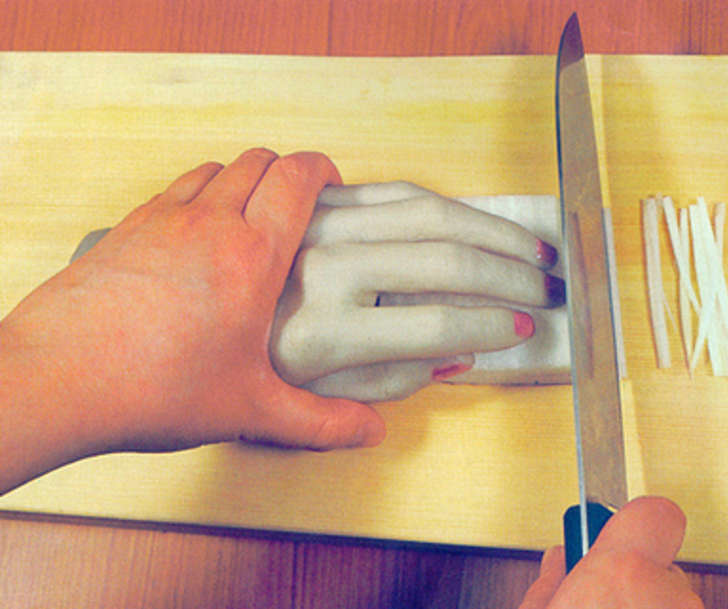
Hand-y chopper
chopper.jpg
Watch the fingers!

Best Japanese snacks and treats to stay cool this summer

In Japan right now, summer vacation is in full swing! Unlike in the United States, Japanese summer vacation begins around July 18th and lasts till the end of August  meaning the time to enjoy summer is short! However, the brutally humid summer weather actually starts sometime in June, or as early as May. The other extreme bummer is that Japanese public schools typically do not have AC or at least don't use it  leading to some students being rushed to the hospital after fainting in the sweltering heat. Sad, but true  at least three students went down during the pre-summer vacation assembly at one of my junior highs. On the other hand, if you're a "salaryman", you get to battle monstrous crowds during morning rush hour on the trains, meaning being pressed up against other hot and sweaty bodies, the stench of other people's BO filling your nostrils, and sweating to death in a full piece suit in case someone from another company which does business with yours might see you out of uniform on your way to work.

Either way you slice it, summer is basically a totally gross three months in Japan.

So, how do the Japanese beat the heat? Some people make a trip up to northern Hokkaido (I always made sure to high tail it out of the country after my first year!), hitting up the local community pool which is bound to be crowded, or going down to the beach. But one of their favorite ways to stay cool is just like in America  eating food!

Garigari-kun
Soda flavored Garigari-kun

One of Japan's favorite ice creams and most beloved snack mascot is Garigari-kun, frozen popsicles. It's named for the crunchy (gari gari) sound you make when crushing bits of ice with your teeth. Inside the popsicle are flavored ice bits that are enjoyable to crunch down on! Garigari-kun is available at convenience stores and supermarkets and sold very cheaply (less than a dollar). Soda is the standard flavor, but the company has gotten creative with other flavors in the past  corn pottage or Neapolitan Spaghetti, anyone?!

How to Read Omikuji


fortune.jpg
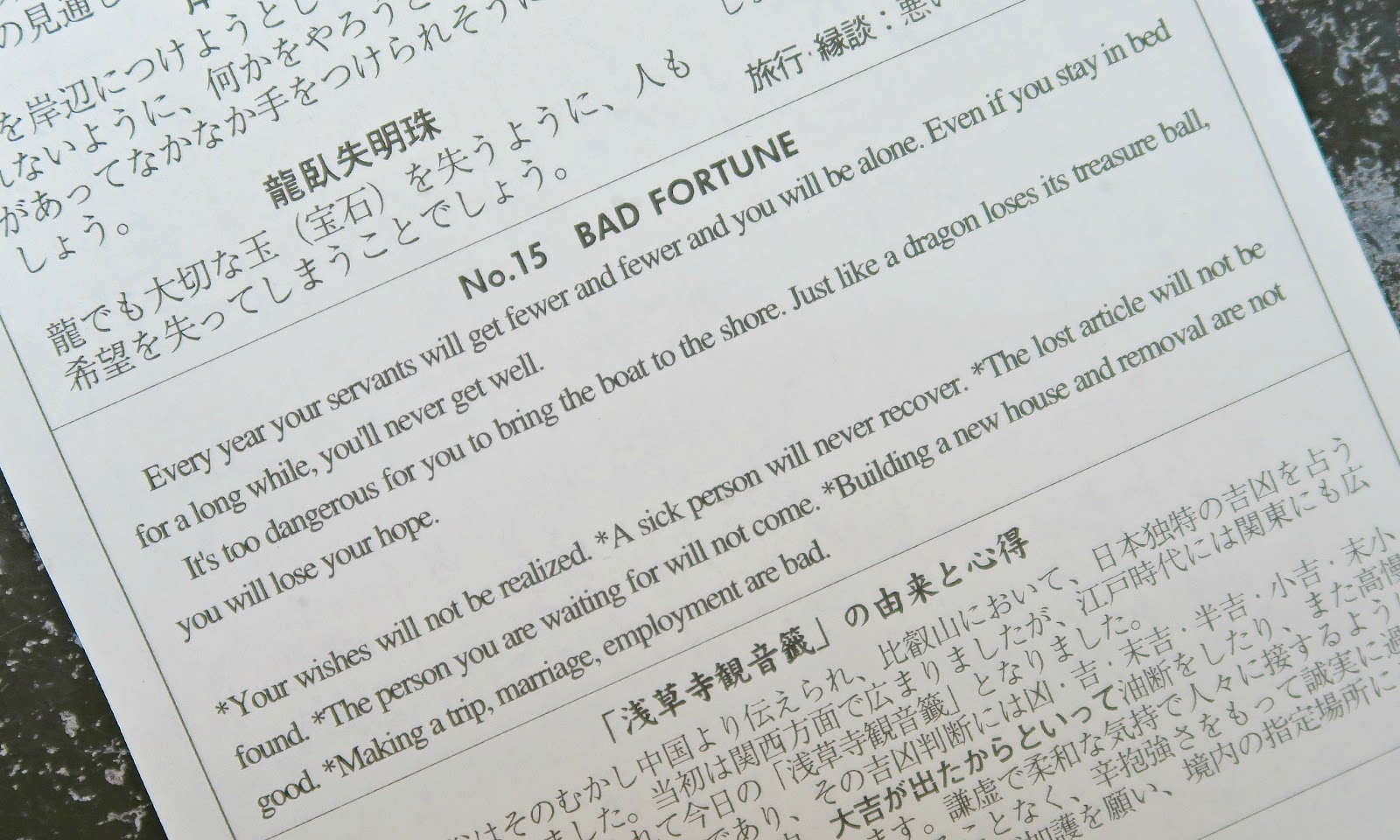
A typical omikuji, or fortune slip, in Japan.
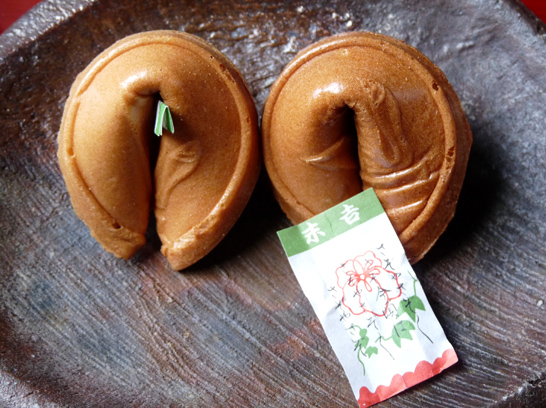
A popular thing to do when visiting a shrine or temple in Japan is to draw an “omikuji”, or fortune slip. These are not your average fortune printed at some factory sitting inside your fortune cookie (whose origins can be traced back to tsujiura senbei (辻占煎餅) in Kyoto, Japan).

senbei.jpg
Tsujiura senbei, the world's first fortune cookie

Omikuji are highly detailed fortunes with full explanations and analysis of love, health, business, and so forth, more akin to your daily horoscope. That being said, not all fortunes are good luck! Be prepared for some bad news, the kind predicting you’ll be having the worst year of your life. After all, omikuji aren’t rolled inside sweet vanilla-flavored cookies.

Once you’ve worked up the nerve to take on “your fate”, follow these steps for reading your omikuji.

Last Update of Izanau Articles

Today I have some unfortunate news to share: the website that I have been writing for as a freelancer since April 2016, www.izanau.com, has been suspended. Luckily the site will still be up, just not receiving any updates from now on, so you can still check out all of my articles (I've Been Writing Up a Storm! Check Out my Articles!, Even More Articles, and Special Announcement on Update of Freelance Articles). I've listed my final six articles below! It was fun while it lasted, and it was basically my dream job combining my love of writing with Japan. The plus side is there will be a bunch of new blogs coming soon that didn't make it all the way to publication with izanau! Thanks for reading!

Big in Japan: Who and What is Moomin?


Moomin, a hippopotamus-like character created by Finnish author Tove Jansson, has been wildly popular throughout the years in Japan. Lake Miyazawa will be home to the first Moomin theme park outside of Finland and is set to open in 2017.